The Farm
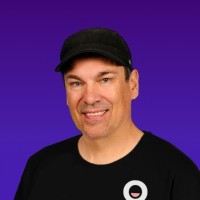
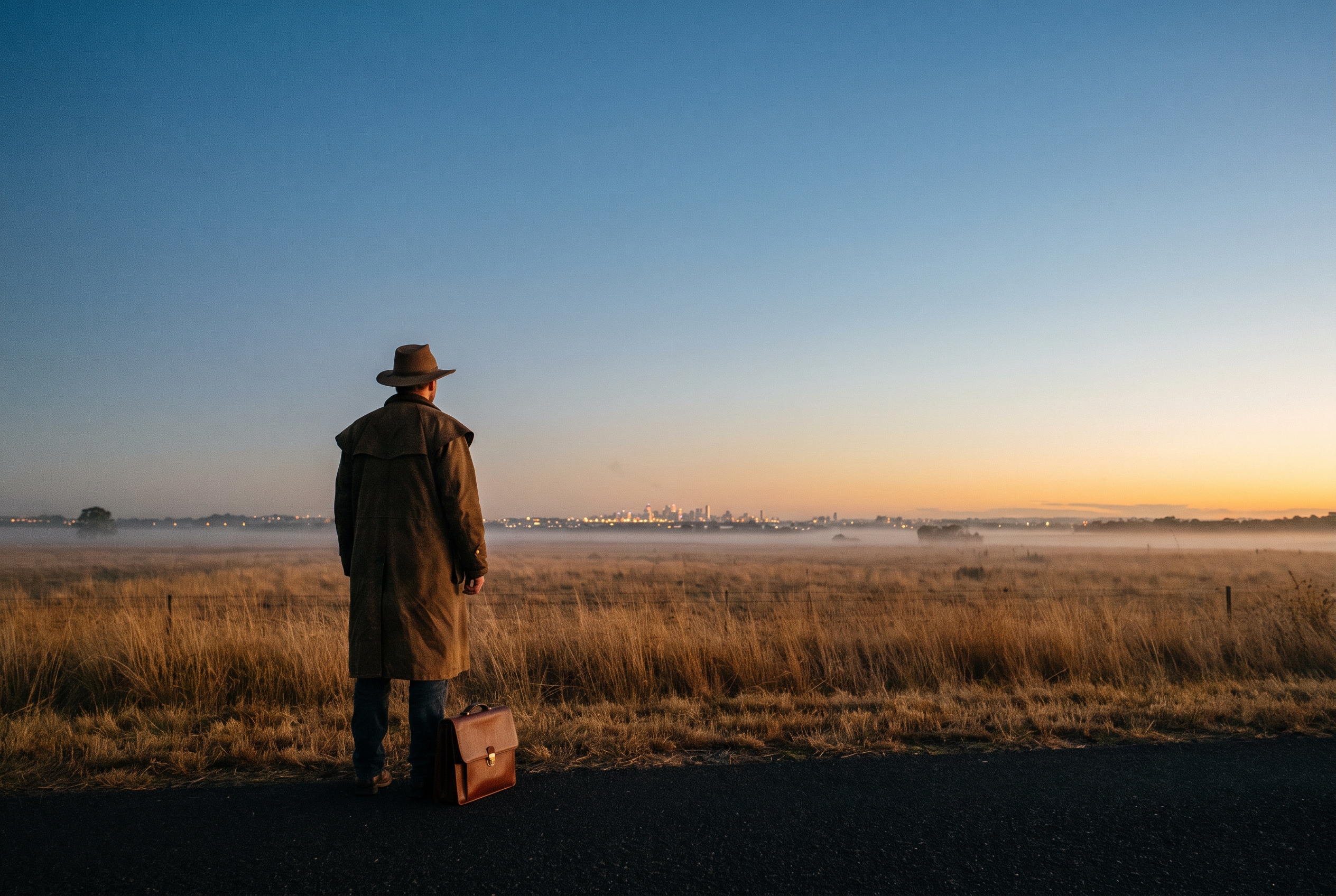
Brad grew up on a sheep farm in South West Victoria. His father taught him a strong work ethic, and his mother — intelligent and determined — made sure the Down children had access to computers from the very early days.
From the moment the Commodore 64 arrived in the household, it became a fixture. Games, BASIC programs, ASCII designs printed on a dot matrix printer — it was all fair game.
Brad also had an inherent creativity. He was constantly borrowing the family's Polaroid camera, photographing ordinary objects and composing images that seemed to have no particular point — much to his mother's frustration. She kept buying the film anyway.
At Portland Secondary College, Brad was one of only six students to pursue an academic stream, studying Physics, Chemistry, English and Mathematics — and spending an inordinate amount of time in the computer room, tinkering with the newly released Apple II and Microbee computers. He'd trade floppy disks in the hallways with like-minded students, swapping the latest Warez games.
Education
The decision to study creative design at Deakin University in Warrnambool was an interesting one. Brad wanted to explore his artistic side, and design promised access to computers in a creative rather than mathematical sense — computer programming was never quite his passion.
It was also a landmark moment for the family. Brad was the first Down to go to university, marking a quiet but significant departure from a farming lineage that his mother's genealogical research had traced back through Australia's early days — the family arrived in 1877 — through English heritage as far as the 18th century, where the trail went cold in Chittlehampton, a tiny village near Barnstaple in Devon.
University turned out to be a playground. First year was a creative smorgasbord: painting, printmaking, sculpture, ceramics, design, photography, life drawing, art history. He didn't immediately find his footing in any single pursuit — ceramics was a particular highlight — but eventually settled on a double major in Design and Photography.
He excelled at both. Apple computers were becoming more common in the design studio, and Brad quickly became immersed in the world of creative design, using his photography skills to generate original content. The early instincts he'd developed with the Polaroid found a natural home in the black and white darkroom.
A Difficult Start
He completed his degree in 1991 and walked straight into a post-recession world where design jobs were scarce and computers hadn't yet been fully adopted in the industry — typesetters were among the only ones beginning to embrace them.
Depression set in. Brad spent a lot of time back at the farm, beginning to wonder if that was where his future lay after all. He worked alongside his father, learned to shear, and spent time understanding lot feeding and crop fertilisation.
Sliding Doors
His mother had other ideas. One day she brought home a copy of The Creative Directory — a thick black book containing every address and phone number for design agencies, printers, advertising and typesetting companies in Australia. She sat down and wrote to around 200 of them, personally pleading for a job on her son's behalf.
Of the 200 letters sent, six responses came back. Five were polite rejections. One was from a company in Sydney with a junior position available, working alongside a freelance designer.
Brad rang from a payphone in Portland. The person on the other end asked if he could come in for an interview the next morning. He explained he was in a small town near the South Australian border. The response: if you can be here by the end of the week, you'll be considered.
Broke and facing the prospect of leaving everything familiar for the Big Smoke, the doubts crept in. He went home to talk it over with his family — and found that his mother had already booked him passage on a sheep truck heading to Newcastle that night. He'd arrive around 7am the next morning.
His father drove him to the highway. The truck pulled up, full of bleating animals. Brad climbed in and discovered he'd be travelling in the sleep cab — with the dog — as there was already another passenger in the front.
The Big Smoke
Thirteen hours lying down on the way to Sydney, head full of ideas and doubts, sleep refusing to come. As the sun rose over the city, the truck stopped in Liverpool and set him down outside the train station. He stood there with $100 in one hand and a portfolio of university work in the other, with no real idea what he was doing.
He asked a platform attendant which train went to North Sydney. She pointed to platform 1 with a slow, disbelieving shake of her head. He waited, boarded, and was soon surrounded by the suited morning commuters heading into the city.
By the time the train reached Wynyard, the crush had thinned enough to breathe. Then came something he didn't expect: a burst of light and open sky as the train flew out onto the Sydney Harbour Bridge. It was a beautiful morning. The Opera House, the harbour — all of it right there. He jumped up and pressed his face to the glass, barely containing his excitement, while the seasoned commuters around him kept their faces buried in their newspapers, the scene around them not seeming to exist at all.
The train rolled into North Sydney. He found the offices of Bottom Line Graphics and was met by the receptionist, Narelle. She took one look at him — and one sniff of the air after a 13-hour journey on a sheep truck — and said: "You must be Brad."
Tony, the Creative Director, came out with a grin. He looked Brad up and down and said: "I can't believe you are here. The job is yours."
He later confided that he'd decided to give a chance to anyone with that kind of determination. From the letter to the journey, he'd fully expected to never hear another word. The sheer act of will told him everything he needed to know about the person in front of him.
Early days at BLG were spent visiting the typesetter, laying out press ads, and using a bromide camera to create finished art. But Brad quickly talked Tony into getting a Macintosh LC and showed him how to use a new program called QuarkXPress to lay out the press ads. It transformed the production process, and Brad quickly became indispensable.
Early Internet Exposure
After a couple of years, Tony did exactly the right thing and told Brad he should go and find a better job. From there, Brad worked across several design studios and ad agencies, eventually landing back in Melbourne working under Simon Hammond at CHE. He got a close look at the murky and political side of advertising — and knew it wasn't where he wanted to be.
He did, however, get access to decent internet and started exploring HTML and building rudimentary websites. He instantly recognised that this would be the future, even if its full potential wasn't yet clear to him.
After a couple more years of slow career progression, and with the window for a UK working holiday visa starting to close, he decided to travel overseas for the first time. He'd been sharing a creative house in St Kilda with a couple of free spirits, getting exposure to music, art and gardening. They'd recently escaped to India and spent eight months there on almost no budget. Travel, it seemed, was possible without significant financial resources.
Rather than following the well-worn path to Thailand or Bali, Brad headed to China and Russia — both still heavily shaped by communism in 1997 and yet to see the transformation known today. He crossed the continent on the Trans-Siberian Railway and ended his journey in St Petersburg, where he spent several days inside the Hermitage, standing in front of the great works he'd studied in his art history classes at university.
London
From St Petersburg, Brad landed in London — and found himself working as Creative Director at Michael Page International, a global recruitment company just beginning to build its website. He joined the steering group for that effort, and learned a great deal about web application development and production.
It was during this period that the real future of the internet became clear to him. That clarity would eventually lead to his meeting with Alex Macpherson, and the journey that would become Known.
There's one detail from this time that matters to the story. Living in Brockley in South London, Brad caught the train to Charing Cross every day. And every day, for almost a year, he would see the word Known — written again and again on tunnel walls, train carriages and signal boxes. The work of some anonymous graffiti artist, the tag stuck with him. It didn't fit the usual creative logic of tagging. It was unusual. And it sparked something.